 Weather today
11 EU countries demand end to 'obstructive' vetoes on foreign policy

A group of 11 European Union countries has joined forces to demand an end to the "obstructive" vetoes that have paralysed the bloc's external action in recent years, arguing that the principle of sincere cooperation must take precedence.
"The Union's culture of consensus is an important source of its legitimacy. Therefore, we continue to strive for consensus wherever possible," the countries say in a letter addressed to High Representative Kaja Kallas and seen by Euronews.
"But we must also ensure that this culture of consensus fosters common action rather than preventing it – otherwise we will have legitimacy but no strength."
Austria, Denmark, Belgium, Finland, France, Germany, Luxembourg, the Netherlands, Romania, Spain and Sweden signed the letter. Germany, the largest member state, has been leading callsto reform the bloc's foreign policy.
"The Union's external action faces a fundamentally changed landscape, shaped by strategic competition, growing instability and attempts to undermine the rules-based international order," they write in the document, also sent to those member states who did not sign.
"In this environment, the Union's ability to defend its values and interests hinges on whether it can mobilise its collective political, economic and diplomatic weight quickly and effectively."
Under EU rules, foreign policy is strictly governed by unanimity, which means one single country can, at any time, tie the hands of the other 26 member states.
This pattern played out repeatedly during the 16-year tenure of Hungarian Prime Minister Viktor Orbán. Before losing power in April, Orbán regularly outraged his peers by using his veto power to extract concessions and advance his interests.
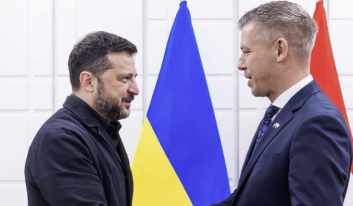
Earlier this year, he triggered an unprecedented crisis when he suddenly blocked a €90 billion loan for Ukraine, personally agreed by EU leaders, over an unrelated dispute with Kyiv involving the Druzhba oil pipeline.







 Studio One